
Basti Panchakarma: Ayurvedic Enema Therapy for Vata Balance, Detox & Internal Nourishment
In Ayurveda, Basti Panchakarma is one of the most important therapies for managing deep-rooted Vata imbalance. People often consider Basti when symptoms like constipation, dryness, bloating, stiffness, lower back discomfort, irregular digestion, disturbed sleep, or recurring imbalance keep returning despite temporary relief.
In classical Ayurveda, Basti treatment in Ayurveda goes far beyond a regular enema. It uses medicated oils or herbal decoctions in a carefully planned way to support detoxification, internal lubrication, nourishment, and dosha balance — especially through the colon, which Ayurveda considers the main seat of Vata.
At DNAveda, we never approach Basti treatment in Ayurveda as a routine procedure. Our Ayurvedic doctors select the type of Basti, medicines, timing, and duration only after assessing the person’s symptoms, digestive strength, condition, and overall doshic imbalance.
Since different types of Basti serve different therapeutic purposes, proper Ayurvedic evaluation is essential before choosing the right approach.
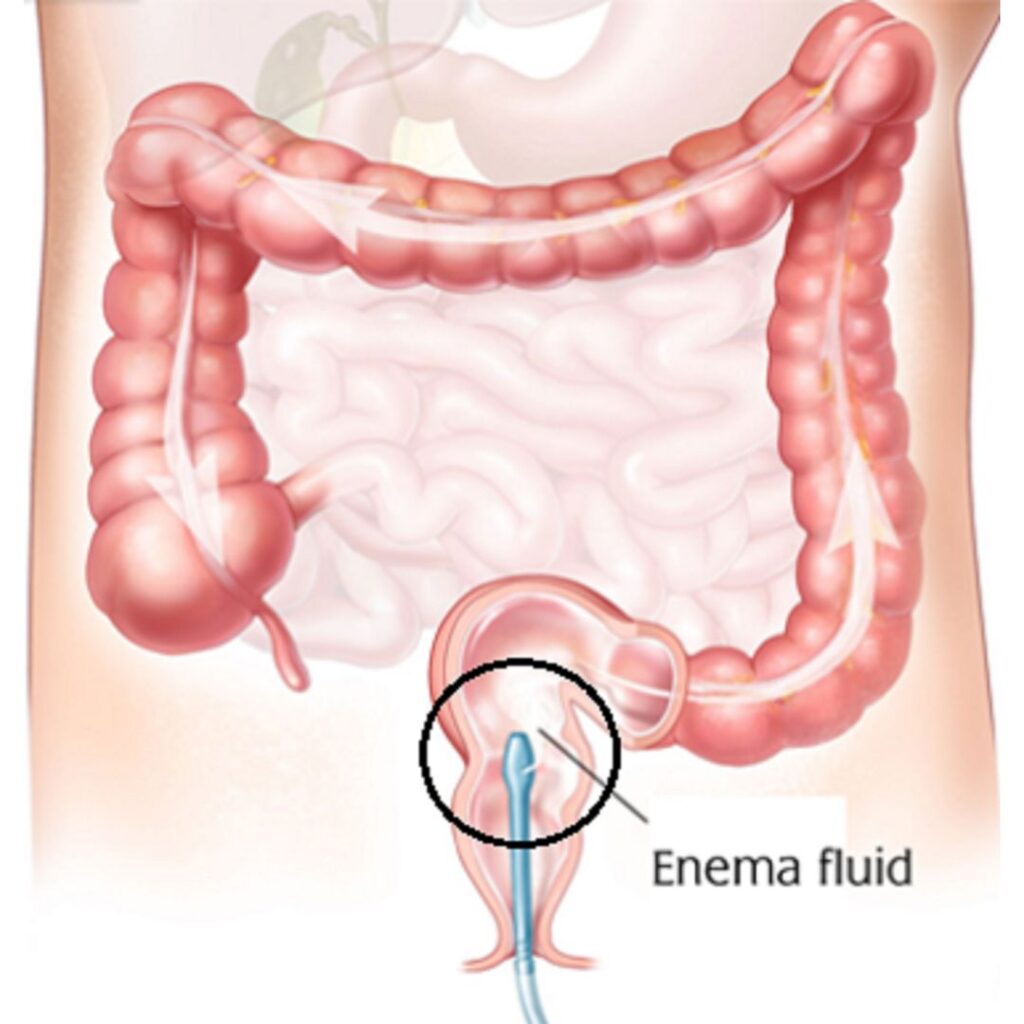
What Is Basti Panchakarma & Why Is It Important in Ayurveda?
In classical Ayurveda, Basti Panchakarma is one of the five main Panchakarma therapies. Among all Panchakarma therapies, Ayurveda places particular importance on Basti for managing Vata imbalance. In this therapy, medicated oils or herbal decoctions are introduced through the rectal route in a carefully planned way. Unlike a regular enema, Basti is not used only for evacuation or temporary bowel relief. Depending on the type selected, it can support detoxification, internal lubrication, nourishment, and dosha balance.
The Ayurvedic Concept Behind Basti Panchakarma
Ayurveda considers the colon to be the primary seat of Vata, the dosha associated with movement, circulation, elimination, and coordination in the body. When Vata becomes disturbed, the body may start showing signs such as constipation, dryness, gas, bloating, stiffness, irregular digestion, or recurring imbalance. That is why Basti Panchakarma plays an important role in addressing deeper internal imbalance rather than only surface-level symptoms.
How Basti Treatment in Ayurveda Works at a Deeper Level
One important aspect of Basti is that it does much more than cleansing alone. In the right cases, it can also support nourishment and internal oleation. The medicine, dosage, sequence, and duration depend on the person’s symptoms, digestive capacity, strength, and overall Ayurvedic assessment.
Types of Internal Basti Therapy: Niruha Basti, Matra Basti & More
In Ayurveda, Basti is not a single procedure. Different types serve different purposes, whether the focus is cleansing, nourishment, or maintaining balance, and the final choice depends on the individual’s condition and treatment goal.
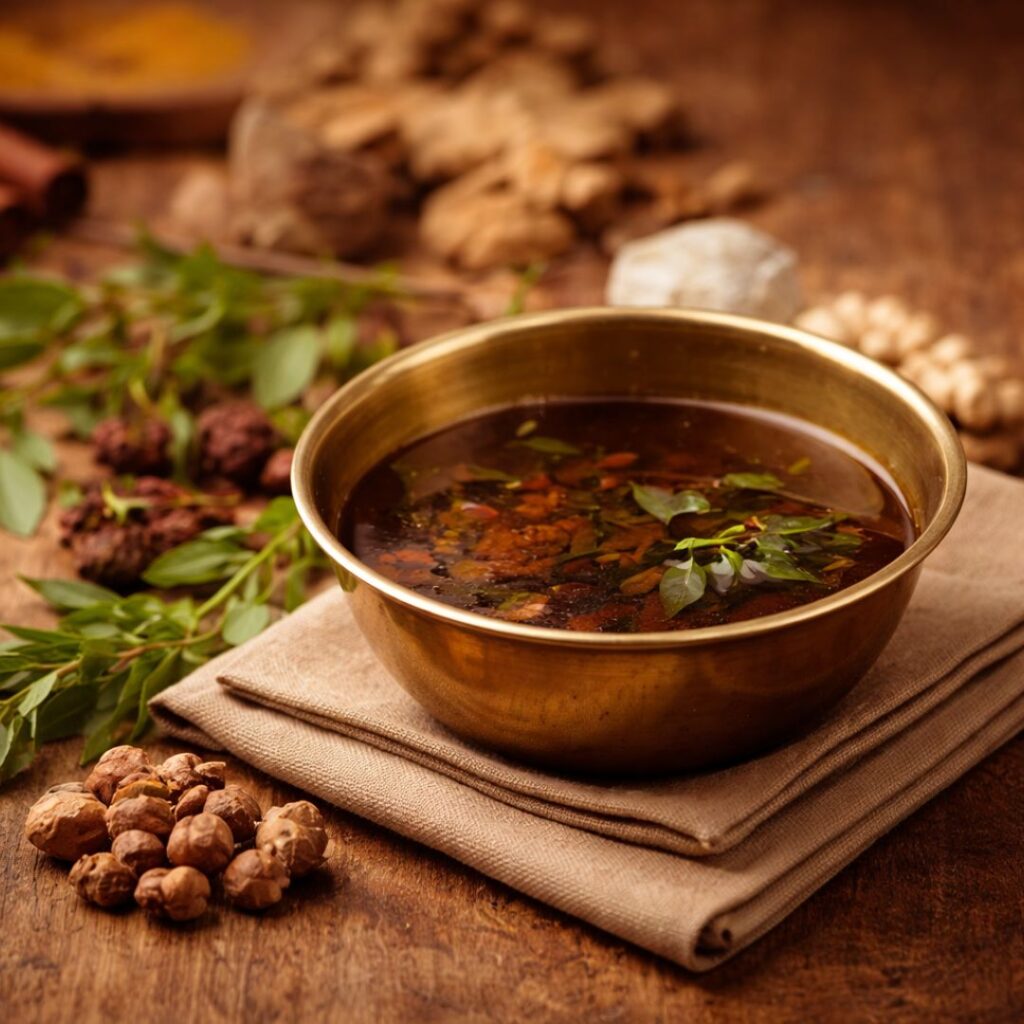
Niruha / Asthapana / Kashaya Basti (Herbal Decoction Enema)
Niruha Basti uses herbal decoctions, oils, and classical ingredients. This type is primarily used when the focus is on detoxification and clearing accumulated doshas. It is commonly considered when Vata is associated with Ama or disturbed digestion.
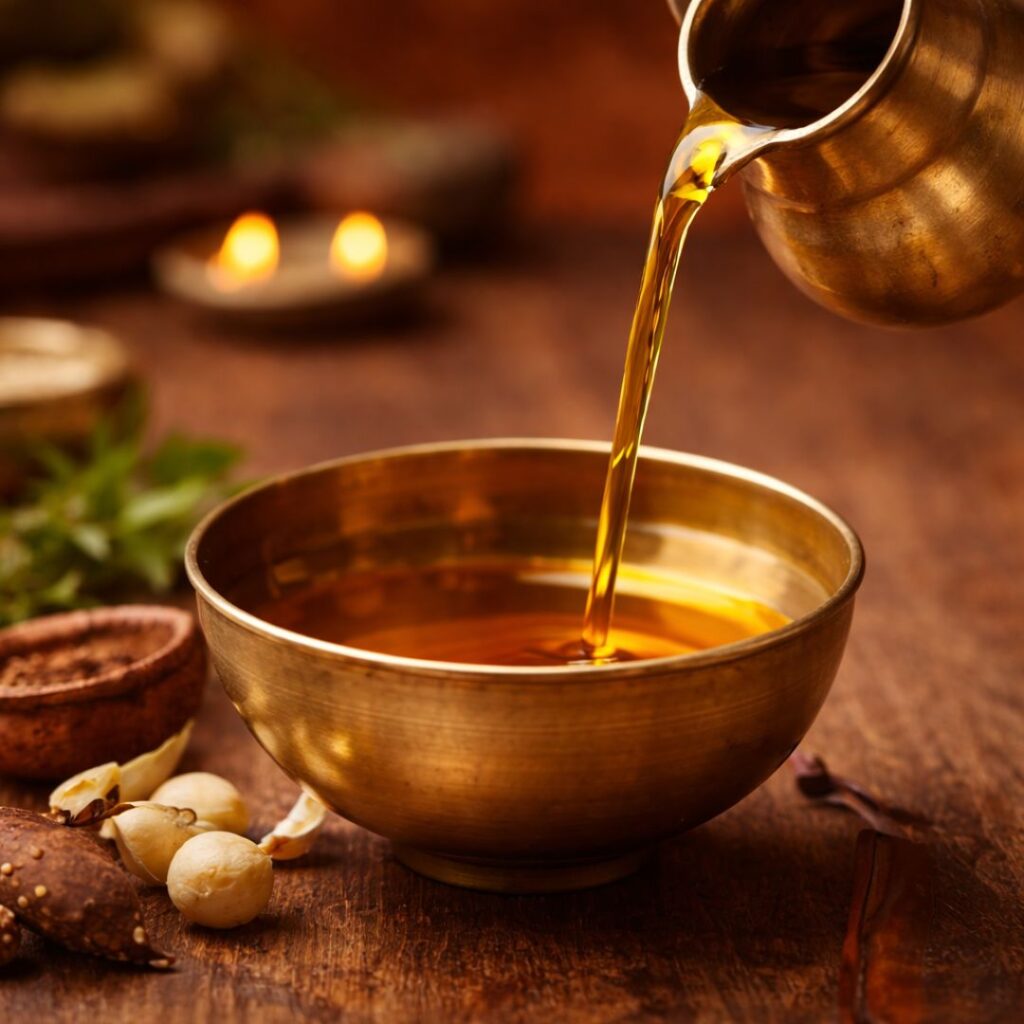
Anuvasana Basti (Oil Enema)
Anuvasana Basti uses medicated oils and is generally preferred when there is dryness, depletion, or a need for internal lubrication. It often works alongside other Bastis to support nourishment while helping maintain Vata balance without strong cleansing.
Matra Basti (Low-Dose Oil Enema)
Matra Basti is a mild oil-based Basti given in smaller quantities. It usually suits cases where a gentle, sustained approach is needed. In addition, it commonly supports Vata balance, lubrication, and daily regulation in individuals who may not tolerate stronger detox therapies.
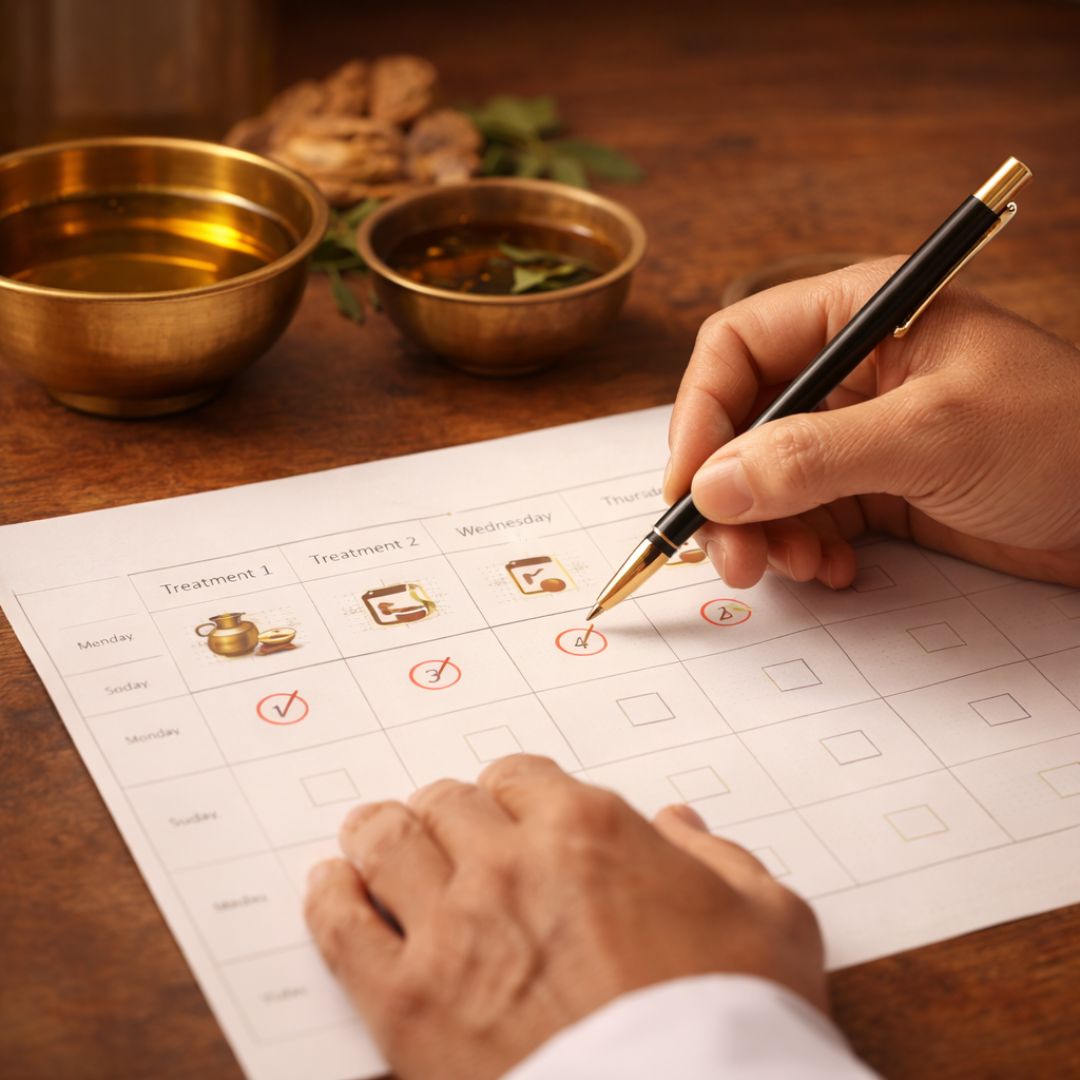
Kala Basti (Structured Basti Program)
Kala Basti refers to a planned sequence of Niruha Basti and Anuvasana Bastis given over a defined duration. It typically fits structured Panchakarma protocols where cleansing and nourishment need to stay balanced in a systematic and controlled way.
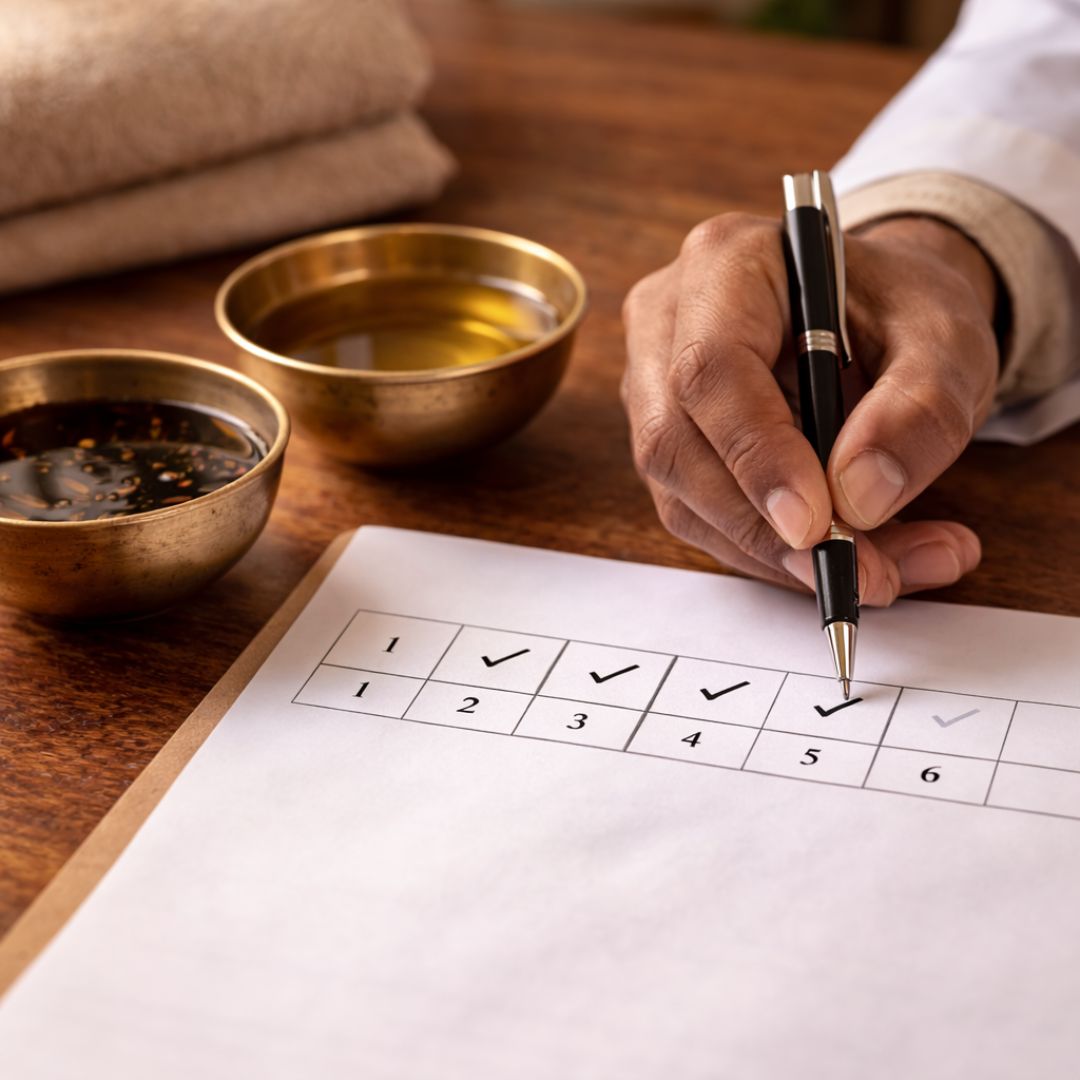
Yoga Basti (Short-Term Basti Program)
Yoga Basti is a shorter, structured course of Basti therapy that runs over a limited number of days. In this approach, different types of Bastis are combined in a specific sequence, usually for cases that need a more targeted therapeutic plan within a shorter timeframe.
How Basti Treatment in Ayurveda Is Planned & What the Process Usually Includes
At DNAveda, Basti treatment begins only after we assess the person’s dosha imbalance, digestive strength, bowel pattern, symptoms, and overall suitability. Since different types of Basti serve different purposes, this therapy never follows a routine or one-size-fits-all approach.
Depending on the condition and type, Basti can form part of a structured Panchakarma plan or work as an individual therapy.


Step 1: Purva Karma (Pre-Therapy Preparation)
Before the main procedure, the body may require a few supportive Ayurvedic preparations.
This preparation may include:
- Assessment & Basti Selection – deciding whether the focus should be cleansing, lubrication, nourishment, or Vata balance
- Body Preparation – using mild internal or external oleation where required
- Timing & Readiness – checking digestion, bowel pattern, and overall readiness for therapy

Step 2: Pradhana Karma (Main Therapy)
The doctor administers the prescribed medicated oil or herbal decoction through the rectal route in a supervised, hygienic setting. The medicine, quantity, and method depend on the type of Basti being used. That is why enema ayurvedic treatment should never be mistaken for a routine bowel-cleansing procedure.


Step 3: Paschat Karma (Post-Therapy Care)
After the procedure, post-care plays an important role in the treatment process. Depending on the type used, the response may lean more toward cleansing or toward lubrication and nourishment.
- food and digestion
- rest and daily routine
- follow-up sittings
- what to observe after therapy
How Many Sessions Are Usually Needed?
The number of Basti sessions depends on the person’s condition, strength, treatment goal, and the type required. Some individuals may need only a short course, while others may require a planned sequence such as Yoga Basti or Kala Basti. In selected cases, Niruha Basti or Matra Basti may also suit the person’s condition and tolerance.
Basti Panchakarma Benefits According to Ayurveda
Ayurveda regards Basti as one of its most important therapies for regulating Vata Dosha, restoring internal lubrication, and supporting deeper internal balance. Rather than acting only at the level of bowel evacuation, Basti supports Vata, digestion, body channels, elimination, and tissue nourishment at a deeper level.

Vata Shamana (Vata Regulation)
One of the key Basti Panchakarma benefits is its role in helping calm aggravated Vata, especially when it shows up as dryness, irregularity, stiffness, restlessness, or disturbed elimination.

Pakwashaya Shuddhi (Colon-Level Cleansing & Balance)
Since Ayurveda considers the colon (Pakwashaya) to be the main seat of Vata, Basti helps maintain cleansing and balance at this important site.

Snehana (Internal Lubrication and Support Against Dryness)
Oil-based Bastis provide internal lubrication and help counter the dryness and roughness that often accompany Vata aggravation.
Srotoshodhana (Channel Cleansing)
Basti helps reduce internal obstruction and support smoother movement within the body. As a result, it can contribute to better functioning of the internal channels (Srotas) involved in elimination, nourishment, and dosha flow.

Apana Vata Samyata (Elimination & Bowel Rhythm)
This therapy may also support the normal function of Apana Vata. In turn, it may help improve digestive rhythm when Vata disturbance affects gut function.

Dhatu Poshana (Support for Tissue Nourishment)
Certain forms of Basti also support tissue nourishment along with cleansing and internal balance. These are among the key Basti Panchakarma benefits described in Ayurveda.
Who May Benefit from Enema Ayurvedic Treatment & Who Should Avoid It?
Doctors usually consider Basti therapy when symptoms suggest a deeper pattern of Vata imbalance, especially when the issue is recurrent, dryness-dominant, irregular, or difficult to settle with temporary measures alone.
Who May Benefit from Enema Ayurvedic Treatment
In carefully selected cases, enema ayurvedic treatment can support Vata regulation, internal lubrication, bowel balance, or deeper systemic correction. Ayurvedic practice commonly considers it for patterns such as:

Constipation or incomplete bowel clearance
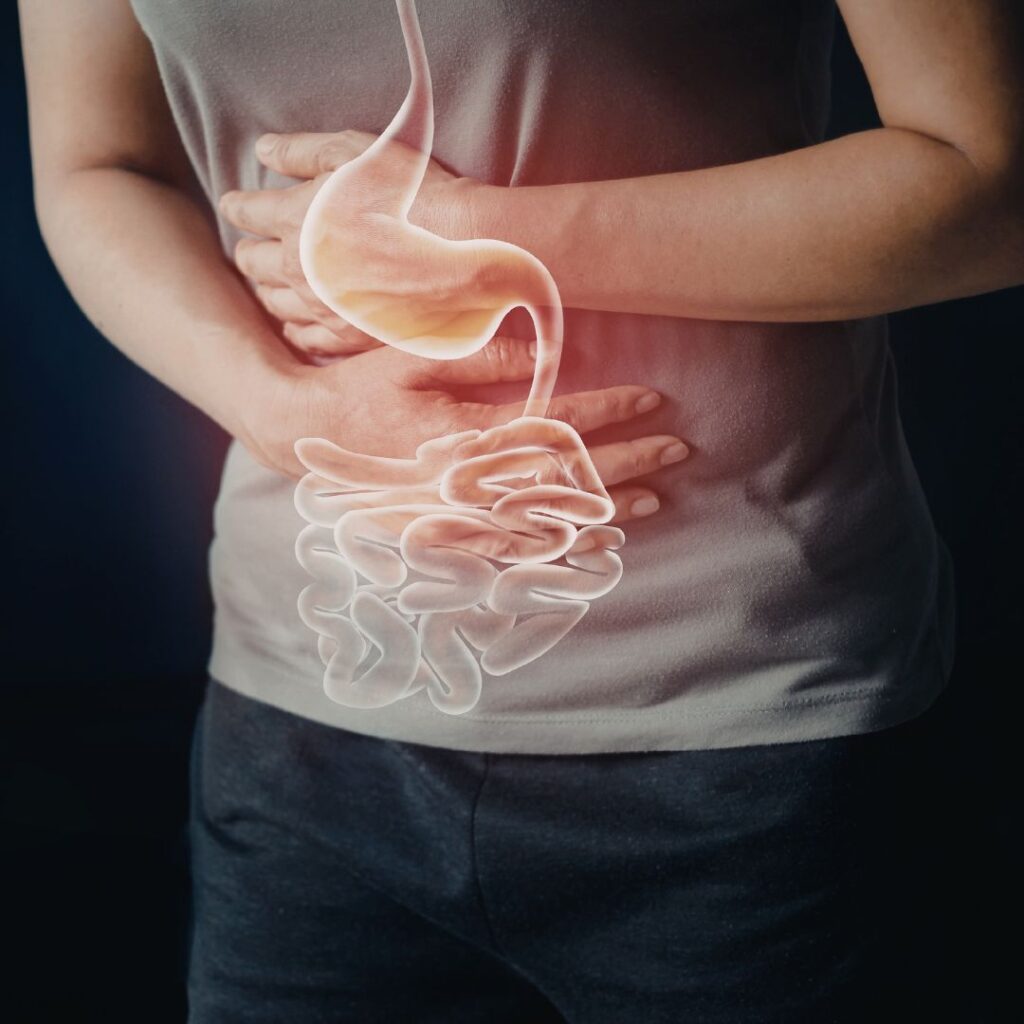
Gas, bloating, or irregular digestion

Body dryness or depletion

Stiffness or lower back discomfort

Disturbed sleep or restlessness

Recurring or fluctuating symptoms
The suitability of Basti treatment in Ayurveda depends not just on the symptom, but also on the nature of the imbalance behind it.
Who Should Avoid or Postpone Basti
Basti does not suit every condition or every stage of treatment. Doctors usually postpone or avoid Basti when the body is not adequately prepared, or when there is acute illness, severe weakness, poor digestive capacity, or another clinical concern that needs a different line of management first. For this reason, enema ayurvedic treatment should never be selected casually or self-administered without guidance.
Basti Treatment in Ayurveda: Cost, Safety & Medical Guidance
Cost of Basti Treatment in Ayurveda
The cost of Basti treatment in Ayurveda can vary depending on:
- the type of Basti selected
- the medications and oils used
- the number of sessions or duration
- whether it is advised as a standalone therapy or part of Panchakarma
Since Basti planning depends on the individual’s condition, the exact cost usually becomes clear after consultation.
Safety of Basti Therapy
When performed correctly, Basti Panchakarma remains a well-established and time-tested Ayurvedic procedure. However, its safety depends on proper case selection, the right medicine, and appropriate administration.
In clinical practice, Basti usually involves:
- supervision during therapy
- planning according to the individual’s condition
- adjusting the dosage, timing, and sequence when needed
Why Medical Guidance Is Essential
Enema ayurvedic treatment should never be approached as a general or self-administered home procedure. In Ayurveda, it works as a therapeutic procedure, and its effectiveness depends on:
- choosing the right type of Basti
- selecting the appropriate medicine and quantity
- deciding the correct timing and duration
- checking whether the body is ready for therapy
For this reason, Basti should always be done under the guidance of an Ayurvedic doctor.
Why Choose DNAveda for Basti Panchakarma in Delhi NCR
At DNAveda, Basti Panchakarma is not approached as a routine Panchakarma procedure. Instead, we select it carefully based on the person’s dosha imbalance, digestive capacity, symptoms, and therapeutic need.

Individualized Basti Planning
First, each case is assessed to understand whether the need is cleansing, lubrication, nourishment, or Vata balance, so the treatment matches the actual imbalance rather than just the symptom.

Classical Principles with Clinical Relevance
Basti follows Ayurvedic principles while also maintaining hygiene, patient comfort, and clinical practicality.

Guidance Beyond the Procedure
Diet, daily routine, and post-therapy care also play an important role in the process, as they support how well Basti works over time.

Doctor-Guided Panchakarma Decisions
The Basti type, medicine, quantity, and schedule depend on proper Ayurvedic evaluation.

Focus on Correct Indication
Basti is not suitable in every case. Instead, the focus remains on identifying whether the therapy is truly required and at what stage it should be planned.

Planned Course of Therapy
Whether used as a single therapy or as part of a planned Basti Panchakarma sequence, proper timing, sequencing, and follow-up remain essential throughout.
Confused About Which Type of Basti May Be Right for You?
Since Basti selection depends on the nature of the imbalance, symptoms, digestive strength, and overall suitability, it is important to understand which type may actually be appropriate rather than choosing the therapy based on symptoms alone.
At DNAveda, every Basti Panchakarma plan follows proper Ayurvedic evaluation so the treatment moves forward with clarity, safety, and purpose.
Frequently Asked Questions (FAQs)
What is Basti Panchakarma?
Basti Panchakarma is a classical Ayurvedic therapy in which medicated oils or herbal decoctions go through the rectal route for therapeutic purposes. In Ayurveda, it is considered one of the most important treatments for managing Vata imbalance, especially where there is dryness, irregularity, constipation, bloating, stiffness, or recurring internal imbalance.
Is Basti the same as an enema?
No, Basti is not the same as a regular enema. While both use the rectal route, Basti treatment in Ayurveda depends on the person’s dosha imbalance, digestive strength, and treatment goal. It may be used for cleansing, lubrication, nourishment, or Vata regulation, not just bowel evacuation.
What happens in Basti treatment?
In Basti treatment, the prescribed medicated oil or herbal decoction is given in a supervised setting after proper Ayurvedic assessment. Depending on the type of Basti, the therapy may focus on cleansing, lubrication, nourishment, or internal balance. The exact medicine, quantity, and sequence vary from person to person.
What are the steps of Basti procedure?
The Basti procedure usually follows three steps: preparation, administration, and post-care. In Ayurvedic terms, these are:
- Purva Karma – pre-therapy preparation
- Pradhana Karma – the main Basti administration
- Paschat Karma – post-therapy care and observation
The exact process depends on the type of Basti selected.
What is the difference between Niruha Basti and Matra Basti?
Niruha Basti and Matra Basti serve different therapeutic purposes in Ayurveda.
- Niruha Basti is generally a decoction-based Basti used more for cleansing and dosha elimination
- Matra Basti is a mild oil-based Basti used for Vata balance, lubrication, and gentle support
The choice depends on the person’s condition, strength, and treatment need.
Is Ayurvedic enema painful?
In most properly selected cases, enema ayurvedic treatment is not usually painful. The experience can vary depending on the person’s condition, sensitivity, preparation, and the type of Basti used. When done correctly under guidance, it is usually kept comfortable, safe, and clinically appropriate.
Is Basti Panchakarma safe?
Yes, Basti Panchakarma is generally safe when done under proper Ayurvedic supervision and selected appropriately. Its safety depends on the right indication, correct medicine, appropriate dosage, and proper timing. It should not be done casually or self-administered without guidance.
How many days is Basti Panchakarma usually done for?
The duration of Basti Panchakarma depends on the individual case and the type of protocol required. Some people may need a short course, while others may require a structured sequence such as Yoga Basti or Kala Basti as part of Panchakarma. The number of sessions is always decided after evaluation.
What should I eat during or after Basti treatment?
Diet during and after Basti treatment usually stays light, warm, and easy to digest. Heavy, cold, fried, or difficult-to-digest foods are generally avoided. The exact diet may vary depending on the type of Basti, the person’s digestion, and whether the therapy is being done as part of a larger Panchakarma plan.
What precautions should be followed after Basti?
After Basti, people should usually follow proper diet, rest, and routine guidance. This may include avoiding heavy meals, excessive exertion, irregular sleep, cold exposure, or digestive strain immediately after therapy. Post-care is important because it supports how well the treatment works.
What are the benefits of Basti therapy?
Ayurveda traditionally values Basti therapy for supporting Vata balance, internal lubrication, bowel regulation, and deeper systemic correction. Depending on the type used, Basti Panchakarma benefits may include support for cleansing, nourishment, digestive rhythm, and internal balance.
Can Basti cause constipation?
Basti does not intend to cause constipation when chosen and administered correctly. However, if the therapy is not suitable for the person’s condition, or if post-care and diet are not followed properly, the response may not be ideal. This is why Basti should always be done under proper Ayurvedic guidance.
Is Matra Basti done daily?
Matra Basti is a mild oil-based Basti that can be used in repeated or planned schedules in selected cases. However, the frequency always depends on the person’s condition, digestive strength, and treatment goal. It should only be done under Ayurvedic guidance.
What is Niruha Basti used for in Ayurveda?
Niruha Basti is generally used in Ayurveda when the therapeutic focus is more on cleansing, dosha elimination, and reducing accumulated imbalance. However, it suits only selected cases after proper evaluation.
Address
D58, near Kaushambi Metro Station, Anand Vihar, Kaushambi, Ghaziabad, Uttar Pradesh 201010
Call Us
+919625554890
Email Us
ayurvedadna@gmail.com